On the night of 30th of April to the 1st of May we celebrate one of the Celtic Festivital called Bealtaine (also Beltane). It marks the beginning of the summer according to the Celtic calendar.
Together with Imbolc (1 Feb), Lughnasad (1 Aug) and Samhain (1 Nov) and the two solstices (in summer and winter) and 2 equinoxes (in spring and autumn) Bealtaine forms part of the 8 Celtic Festivals. All these mark important dates in the year that are related to the changes in nature and the entering of a new stage in the cycle of life.
The 1st of May is also celebrated for other reasons. One of them is Labour Day which commemorates the 8-hour-workday. In Germany they call this night Walpurgisnacht or Saint Walburga’s Eve based on the dealings of the Christian abbess Walburga in Francia (8th century). It has also been called the witches night, but I am not going into that now as I want to keep it short and simple.This post focuses on the Celtic Day Beltaine and I want to give you a brief introduction to the celebrations and the history.
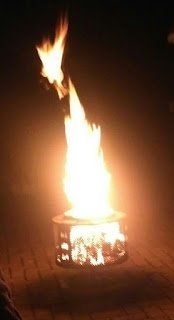
At Bealtaine we move into the green halls of summer. On this night half way between the spring equinox and the summer solstice we mark the “season of warmth and light”. With rituals and feasts and bonfires we celebrate life, growth, love, health and prosperity as well as good fortune and sexuality. The meaning of the word is said to be fire or even lucky fire and therefore fires are found all over.
Back in the days the druids lit fires in the night of the 30th on high hills to bring the power of the sun down to earth to purify and sanctify the community and their animals. Fire was seen as a connection between humans and the divine and the flames represented hands lifted up in the air in prayer.Offerings like butter, custard of eggs, oatmeal, milk, beer and whiskey were brought for the goodwill and blessings of the gods. The offerings were poured into the ground to give thanks and the remainders were eaten.
Also the woods of nine sacred trees were kindled. One of them was birch, the tree of new beginnings, purification and the spirit world. The other trees were willow, hazel, elder, ash, yew, elm, oak. Unfortunately the 9th one is unknown.
Later in the 19th century Ireland young men thrust brands of heather or dried sedge into the fire and whirled them over their heads to imitate the circling sun. People jumped over the sacred fire for protection, hope, purification, good fortune and prosperity. Women for instance jumped over it for good husbands or an easy birth. Even livestock was herded in between two fires to purify them from disease.
Overall it is also about outer growth, fertility and new life – creation in all its manifestations.
The veil of the worlds is thin especially at dusk and dawn. In comparison to Samhain when we enter the dark and go inwards to commune with the spirit world, at Bealtaine we gather the Otherworld outside of us and connect to for example nature spirits like fairies. It is a time for magic and transformation and the thin veil makes it more accessible and speeds up changes. What do we really want in life? What changes could we make to lead a happier and more fulfilled life?
Now you probably wonder how to celebrate Bealtaine these days. You could gather with friends and family make a little ritual out of it. Light a fire, dance, drum and sing and make wishes to manifest what you want your life to be like. Create a circle and pledge for the new things in your life. Be merry and celebrate life and all of its wonders!
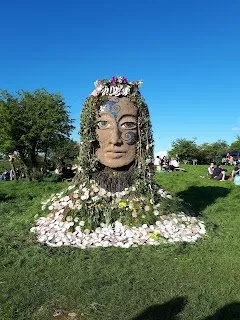
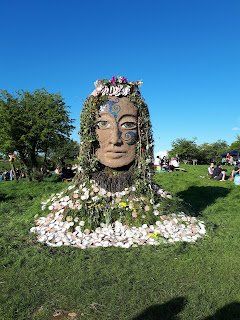
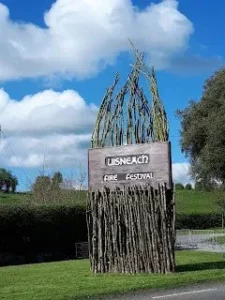
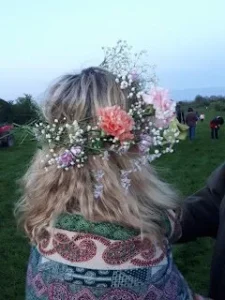
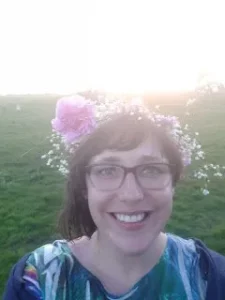
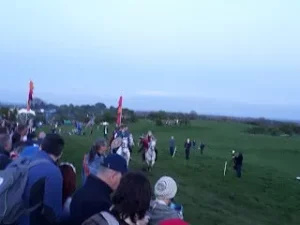
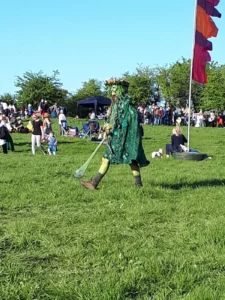
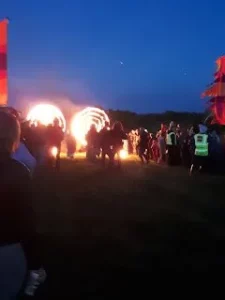
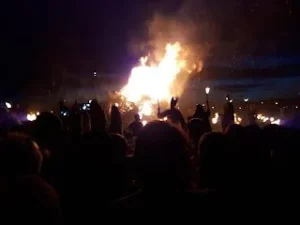
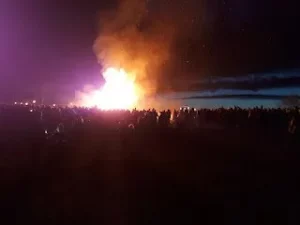
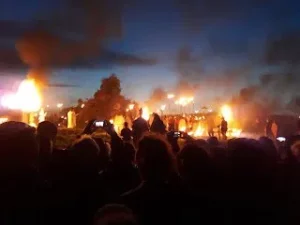
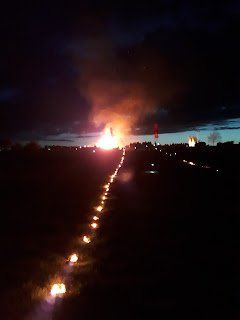
I went to the Fire Festival on the Hill of Uisneach close to Mullingar. Some say it is the belly button of Ireland and a power place of the old Celts. It was a beautiful sunny day and we witnessed this magical event first hand. The fire and the ceremony around it were giving it a special setting marking the transition into the new season, a new stage in our lives. Although we didn´t get to jump over the fire it was still a fabulous way of celebrating.
Here a few impressions from the festival:
A lot has been written about the Celtic traditions and there are a lot of stories I have not yet heard about. From the ones that are familiar to me I recommend the books Earth Alchemy and Earth Wisdom by Glennie Kindred as she gives a beautiful practical approach to the festivals. Also Kindling the Celtic spirit by Mara Freeman gives a well researched overview of the traditions. Some of the information in this post come from those books.
Have a great summer!!
Glennie Kindred: http://www.glenniekindred.co.uk/
Mara Freeman- Kindling the Celtic spirit
https://en.wikipedia.org/wiki/Beltane
https://en.wikipedia.org/wiki/May_Day
http://metro.co.uk/2017/05/01/what-is-may-day-and-why-do-we-celebrate-it-6602613/
https://en.wikipedia.org/wiki/Walpurgis_Night
———–
originally posted on 10th May 2018